Just choose one of these sites to drop down the information,
to Know more about Jordan Historical Sites to define which paradise you want to visit.
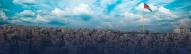
Jordan’s modern capital encompasses the remains of many civilizations—Neolithic, Roman, Byzantine, Islamic, Umayyad, and Ottoman, to name just a few.
The city was once known as Rabbath-Ammon, then Philadelphia, later Ammon, and more recently as Amman. The area’s role as a population center reaches back to the prehistoric Pre-Pottery Neolithic Age, when the remarkable plaster statues discovered at Ein Ghazal were buried in a thriving settlement. These wonderful figures, around 9,000 years old, are a fascinating reminder of humanity’s long history in the region.
According to Jordan’s 2004 census, the population of Amman was established at 2 million people—though at times, it seems like that’s the number of cars on the streets.
Places to Visit in Amman
Some of the many places you might visit in Amman are noted below:
The Citadel
Offers a wealth of archaeological treasures, including the Umayyad Palace, Byzantine Basilica, and the Roman Temple of Hercules. Jordan’s small but jam-packed National Archaeological Museum is also located here and offers terrific views over the bustling downtown souks.
The Roman Theater
The most obvious and impressive relic of ancient Philadelphia. Two museums sit beside the theater: the Jordan Folklore Museum and the Museum of Popular Traditions.
King Hussein Mosque
The heart of modern downtown Amman. This Ottoman-style mosque was rebuilt in 1924 on the site of an ancient mosque, which was itself likely built over the Byzantine cathedral of Philadelphia.
The Gold Souk
Located between King Hussein Mosque and the Citadel, it is famous for its shops packed with glittering gold jewelry. Tiny windows display rows of necklaces, bracelets, and other ornate pieces.
King Abdullah I Mosque
One of the finest examples of modern Islamic architecture, distinguished by its bright colors, large blue dome, Islamic library, and open squares. It is a popular backdrop for international TV crews reporting from Amman.
The Royal Automobile Museum
Showcases a marvelous collection of classic and modern vehicles, many of which were once owned by members of the Royal Family.
The Interactive Children’s Museum
Located in King Hussein Park in west Amman, it offers fun for the whole family with hands-on exhibits, games, and learning experiences focused on Jordan’s history, heritage, and traditions.
Modern City Life
As expected of a national capital, Amman offers a wide range of international restaurants, coffee shops and internet cafés, nightclubs, shopping areas and malls, cinemas, and galleries. However, with nearly half of Jordan’s population living in the city, the “bustle factor” is predictably high.
A continual influx of refugees from more volatile parts of the region has contributed to heavy traffic and extensive construction throughout the city.
Final Note
All things
considered, Amman serves more as a gateway and business center than as a
leisure destination.

Aqaba is Jordan’s only port city, strategically located and long inhabited as a major trading hub. This role is well supported by extensive archaeological evidence, including the Mamluk Fort, the Ayla Byzantine city, Tell al-Khaleifeh from the Iron Age, and what archaeologists believe to be the oldest church in the world.
The city is also home to a museum featuring exhibits and information about Aqaba’s past. The museum building was once the residence of Ash-Sharif Hussein bin Ali, the great-great-grandfather of His Majesty King Abdullah II.
In recent years, Aqaba has been designated a special free trade zone, encouraging significant industrial development through favorable customs and tax regulations.
As a Red Sea port
city, Aqaba offers all the attractions of a beach holiday destination,
including sandy beaches, dive centers, resort hotels, and a wide range of water
activities. Visitors can take diving courses or snorkel among some of the
world’s most colorful coral reefs. Other water sports include windsurfing,
parasailing, water skiing, jet skiing, and banana boat rides. For those seeking
a more relaxed experience, glass-bottom boats cruise along the reefs, offering
a dry-foot view of the vibrant underwater world.
Visitors should
be aware that Aqaba is currently undergoing a major development phase. Over the
next six years, plans include the addition of approximately 7,000 hotel rooms,
along with villas, marinas, lagoons, golf courses, and other resort-city amenities.
These projects are expected to create around 90,000 new jobs, prompting further
construction of housing and municipal services. During this period, visitors
may experience construction noise and temporary inconveniences as the city
continues to grow.
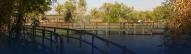
Azraq Oasis was a traditional stopping point for both human trade caravans and migratory birds. It is just over an hour’s drive east of Amman, on the busy highway which links Amman to Damascus. The most striking human artifact is the black basalt fortress. This fort was first built by the Romans around 300 CE. The structure was in almost continuous military use by the Byzantines and Umayyads. In 1917, T. E. Lawrence used the fortress as the winters headquarter during the Great Arab Revolt. The oasis is an important stopping point by air as well as land. Each year flocks of birds visit Azraq during their annual migrations making this a must-see for any bird enthusiast. By the late 1980′s the wetlands which encouraged the migrations had been all but destroyed. Now that the Azraq Wetlands Reserve has been detailed to the Royal Society for the Conservation of Nature, the slow process of re-nourishing this environmentally critical feature has begun, and Azraq once again hosts tremendous flocks of birds along the migratory routes between Africa and both Asia and Europe, making it a twice-annual bird watchers’ paradise. Both the Azraq Wetlands Reserve and the Shumari Wildlife Refuge, where you’ll find successfully-bred herds of Arabian Oryx and ostriches, are within and alongside the Azraq Oasis. The Shumari Refuge is currently closed to visitors while re-zoning is in process.
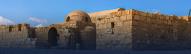
The wealthy Umayyad Caliphs, who used to come to Jordan for leisure and in hunting trips, built some beautiful Castle-like Qasers ,”Palaces”, at the heart of the eastern Jordanian desert. In their remote and lavishly decorated desert retreats, princes, caliphs, governors and noblemen indulged in hunting, falconry, racing horses and camels, bathing and eating, and poetry recitals. Most of those palaces were built in the seventh or eighth century. Those places are known now as “Desert Castles”.
Most famous is Qaser Amra, one of the best-preserved castles, which is a UNESCO World Heritage Site. Its interior walls and ceilings are covered with lively frescoes, and two of the rooms are paved with colorful mosaic.
Others include: Qaser Mushatta, Qaser al – Kharrana, Qaser at -Tuba and Qaser al-Hallabat. A full day in the eastern Jordanian desert will give you the chance to tour the main desert castles and selected other sites such as Um al-Jimal (a abatean/ Roman/ Byzantine caravan way-station), Azraq Oasis (a Roman fortress, later used as a winter headquarters during the Arab Revolt of the early 20th Century), Azraq Wetlands Reserve or Shumari Wildlife Refuge.
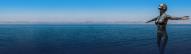
At over 400m below sea level, the Dead Sea is the lowest point on the Earth’s surface. The name “Dead Sea” came from the Greek traveller Pausanias because the water composition allows nothing to live. The salt content, around 29%, is almost ten times greater than that of the Earth’s oceans. At night you can see the lights of Jerusalem, Bethlehem and Jericho from the Dead Sea shores.
A swim in the Dead Sea is a unique experience. It is virtually impossible to sink in the buoyant waters – hence all the well-known pictures of visitors reading the morning paper while bobbing along the surface. The salts and rich black mud of the Dead Sea have been considered therapeutic since ancient times and are still marketed throughout the world. It’s a very long-standing trade; bitumen mined from the Sea by the Nabateans was exported to Egypt for use in the embalming process. The many luxurious Spas on the shore of the Sea feature Dead Sea mud and salt treatments in addition to more familiar spa offerings. (Check our health and wellness page).
The Dead Sea has a historical legacy as rich as its mineral content. Jordan tourist guides have long designated a particularly striking rock pillar as “Lot’s Wife,” and the monastic pilgrimage church of Lot’s Cave is a shrine which attracts many visitors. Near its waters were the Biblical cities of Sodom, Gomorrah, Admah, Zeboiim and Zoar. To visit the Dead Sea, you need to hurry–the sea is evaporating at approximately 1m per year. The Jordan River, the Dead Sea’s primary water source, is now largely diverted for agricultural uses along the Jordan Valley. Growing population and water-consumption pressures have also led to dams and diversions along many of the spring-fed wadis along the coast. In 2005 Jordan went into partnership with Israel and Palestine to begin studies into a way of saving it. The scheme calls for 870 million cubic meters of fresh water per year. Environmental groups, however, are concerned with the effect this will have on the surrounding ecosystem. A plan to dredge a channel from the Red Sea to the Dead Sea to import a new supply of nourishment for the shrinking inland body is likely to gain the go-ahead as the most feasible of many proposals. No doubt this will impact the Dead Sea…..but at least there would still be the Dead Sea…..
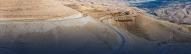
The King’s Highway is one of the oldest trade routes in Jordan – a remarkable fact in the context of this country which lay at the heart of many of the ancient world’s key trade routes. The route, which runs along the mountain plateau above the eastern side of the Great Rift Valley, connected the Biblical kingdoms of Jordan (Edom, Moab and Ammon), hence came the name “King’s Highway.” In the early 2nd century AD, Trajan used this route to build his “Via Nova Trajana.” Trade caravans moving between points in Syria, Asia Minor, the Arabian Peninsula and the Far East, passing on to markets around the Mediterranean, Egypt and Europe, used portions of this route. The passage of trade caravans brought prosperity to the inhabitants of lands along the route and, ironically, catastrophes. Many battles were waged throughout the millennia for control over the route and, thus, the trade goods traversing it. The King’s Highway, or key portions thereof, have been used continuously from the Bronze Age right through contemporary times. The Modern King’s Highway The modern route – actually a winding two-lane rural road rather than a highway – runs from Amman to Aqaba, passing some of the most beautiful towns and splendid scenery in Jordan. The halfway point on the most travelled part of the route from Amman to Petra is the spectacular switchback road through Wadi al-Mujib, sometimes referred to as Jordan’s “Grand Canyon.” Two other major east–west canyons are also traversed along the King’s Highway by scenic switchback roads: Wadi al-Wala, south of Madaba, which contains the ruins of the Early Bronze Age urban city of Khirbet Iskander. Wadi al-Hasa, between Karak and Tafila, a beautiful valley containing several Nabatean sites, including Khirbet at-Tannour, as well as the Hamamat Afra hot springs, which enjoy excellent local popularity due to their reputed curative properties. Travel Recommendation The King’s Highway is quite a long drive to attempt in one day, particularly if you want to stop and enjoy some of the ancient ruins and modern natural beauty along the way. We recommend you let us plan your tour to include selected sections of the King’s Highway as you travel around the country.
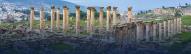
One of the ancient Decapolis trading cities, Jerash is one of the world’s best-preserved Greco-Roman provincial cities. Its colonnaded streets, baths, theaters, plazas, and arches remain in exceptional condition. Jerash is situated north of Jordan in the ancient region of Gilead, 45 km north of Amman.
History
Recent excavations show that Jerash was inhabited during the Bronze Age and Iron Age (3200 BC–1200 BC). After the Roman conquest in 63 BC, Jerash and the surrounding land were annexed by the Roman province of Syria. An impressive archway commemorates the visit of Emperor Hadrian to the site.
Main Attractions
There are many striking monuments and structures to be seen:
Hadrian’s Arch
The Hippodrome
The Temples of Zeus and Artemis
The Oval Forum, surrounded by a fine colonnade
A long colonnaded street
Two theatres
Two baths
Stables
Later Byzantine churches
All are part of the Jerash experience. Just remember—don’t whisper any secrets while you’re visiting the theatres in Jerash. These acoustically amazing structures will broadcast your whispers to the farthest row of seats!
Roman Army and
Chariot Experience (RACE)
Make sure to schedule time to catch the daily RACE performance when you visit Jerash. RACE, short for Roman Army and Chariot Experience, is a captivating show performed twice daily at 11:00 am and 2:00 pm (with the exception of Tuesdays, when no show is performed, and Fridays, when only the afternoon performance is offered).
While the schedule may vary, the experience is always exciting. The creators of the event have invested extensive research and training to create authentic re-enactments of Roman battle drills, gladiatorial contests, and a thrilling 7-lap chariot race. You’ll be transported back in time as you sit in the Jerash Hippodrome and witness the very same events that captivated the citizens of ancient Gerasa over 2,000 years ago.
Jerash Festival
& Cultural Events
The Jerash Festival of Culture and Arts was an annual event from 1981 to 2002, showcasing talented artists and theatrical groups from all over the world during the summer season.
Nowadays, the festival has expanded into the Jordan Summer Festival, which includes performances held at Jerash theatres, the Roman Amphitheatre in Amman, and the Amman Citadel. Information on the upcoming summer event will be available soon, and a link to it will be posted.
If you plan to
visit during the summer, you might be lucky enough to attend one of the
performances. Most events feature exceptional Arabic musical acts, catering to
the local population and the summer influx of visitors from the Gulf States.
Moreover, renowned entertainers from Europe and North America are also featured
in this festival.
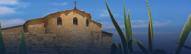
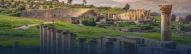
With its rich antiquities, Pella is a favorite among archaeologists. Below the site’s main section lies a perennial spring, which bubbles water into the nearby valley. To visit in the spring months is a particular treat as the hillsides are abundant with anemones, calendula, spring groundsel and asphodel.
Pella was often made into a battleground, perhaps the reason that so little of the Roman Pella still exists. It has also been the victim of several earthquakes, causing a great degree of damage to the site.
The Pella site also shows evidence of an Early Islamic residency and a medieval mosque. It is most likely dating back to 635 after Muslim forces defeated the Byzantine army and moved into Pella, living side by side with its Christian residents.
Dating back to 250,000 BC, hunters have roamed the hills surrounding the site. By 5000 BC, there was a Neolithic farming village at Pella itself. The residents of Pella traded widely throughout the Mediterranean in the Canaanite period, as attested by the discovery of artefacts such as perfume bottles, pottery, and ivory boxes. It is said that Alexander the Great “discovered” Pella, but there is no evidence to confirm this. Part of a Chalcolithic settlement (4th Millennium BC) is situated on the slopes of Jabal Sartaba, east of Tell Husn.
You can see why this Jordan Valley site is an archaeologist’s dream – something for everyone!
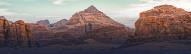
Wadi Rum – The Valley of the Moon
T.E. Lawrence once described the moon-like terrain of Wadi Rum as “vast, echoing and God-like.” This is by no means an overstatement. With its bright red rolling sand dunes, dramatic rock formations, canyons, and natural rock bridges, Wadi Rum is a place like no other. In spring, the hills begin to turn green and fill with magnificent wildflowers, such as red anemones and Jordan’s national flower, the stunning Black Iris. Take a glance, though—flowers can bloom and fade almost overnight in this desert climate.
Wadi Rum has always been more a passageway than a place to settle. You won’t find large-scale archaeological sites here. However, passersby left behind wonderful pictoglyphs and inscriptions to mark their routes, and more than 1,000 rock art inscriptions remain scattered along the ancient trade routes.
Nomadic Bedouin tribes have made Wadi Rum their home—once in service of the spice caravans, and now catering to the many visitors who come to enjoy this famous desert. Today, almost no extended families continue a fully traditional nomadic life in the iconic black tents. Most families, especially those with children, have settled in villages on the fringes of Rum or beside the Turkish fortress beneath Jabal Rum. You will still find “empty-nesters” who have returned from village life to the tents where they feel most at home, and when school is not in session, village populations happily return to their desert dwellings.
Wadi Rum is an ideal destination for those seeking complete escape from the noise and lights of modern living. There are even places where cell phones—those weeds of Jordan’s landscape—fall silent. With no city lights to interfere, the desert night sky is breathtaking. On most nights, you will see several shooting stars, and if you visit in early August during the annual Perseids meteor shower, the sky resembles a grand fireworks display.
For more information about excursions
to and through Wadi Rum, please visit our Adventure Tours page.
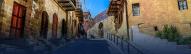
Salt is about 28
km N/W of Amman. The name as-Salt comes from the Latin origin “Saltus” meaning
the Valley of Trees or “ThickForest”. It was the regional capital during the
Byzantine era and the capital of the important province of Al-Balqa during the
Islamic period.
In the late 19th
century, Salt became an important commercial center and went through a period
of rapid expansion. Many buildings from this period survive to the present day.
They were built in an architecturally elegant style, using attractive honey-colored
local stone wrought-iron balconies.
Right after World
War I, the town was the site from which Herbert Samuel, British High
Commissioner for Palestine and Trans-Jordan, chose to make his announcement
that the British favored self-government for Jordan (which was finally granted
in 1921).
You can have a
nice afternoon wandering around, drinking coffee at a local coffee shop, and
visiting sites such as Share’ al-Hammam, the Museum of Antiquities of Salt, the
handicrafts shops, the Latin Church Complex, the shrine of Prophet Ayuob
(Biblical Job) and the shrine of Joshua. Future plans are to create a
pedestrian mall that links historic buildings, handicrafts shops and other
points of interest in the center of Salt.
Nearby, there is
Wadi Shuayb, famed for its fertile soil and the quality of its fruits and
vegetables. It is believed to be the burial place of Prophet Shuayb (Jethro;
Moses’ father in-law).

Dana Nature Reserve is a system of wadis and mountains which extends from the top of the Rift Valley down to the desert lowlands of Wadi Araba. Dana is truly a world of natural treasures.
Visitors to Dana will experience the beauty of Rummana Mountain, the mystery of the ancient archaeological ruins alongside the Wadi Finan Eco-lodge, the timeless tranquility of Dana Village, and the grandeur of the red and white sandstone cliffs of Wadi Dana.
The RSCN operates the 9-room Dhana Guest House in the old Bedouin village of Dhana, and the seasonal Rummana Camp inside the Dhana Nature Reserve. At the bottom of Wadi Dhana, the Wadi Finan Eco-Lodge provides comfortable accommodations while exploring the extensive ruins of the ancient copper mines and settlements of Finan.
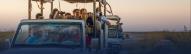
Created as a breeding center for endangered or locally extinct wildlife, the Shumari Reserve is home to some of the rarest species of animals in the Middle East. In this small 22 Km2 reserve, you can often see the Arabian Oryx roaming freely in the desert grassland.
Ostriches, Gazelles, and Onagers can also be observed in their enclosures. Shumari’s breeding enclosures provide a small “zoo” for visitors, making the reserve a popular spot for children and school outings.
These animals are rebuilding their populations in this safe haven, protected from the hunting and habitat destruction that nearly wiped them out.

Now a little-visited area just west of the busy Desert Highway, Humeima (Hawara) was a major Nabatean agricultural and trade-route provisioning settlement made possible because of the Nabatean hydrology mastery.
The settlement relied on a system of aqueducts carrying water from the springs in the escarpments above the site, as well as a typical Nabatean channeling system to capture the run-off from infrequent rains.
Through the Roman occupation, Humeima remained an important fortress along the Via Trajana, and the settlement had continued occupation through the Byzantine and early Islamic periods, although with shifting trade routes its strategic importance was greatly diminished.
In this “white city”—the sandstone formations are noticeably paler than in the nearby red desert of Wadi Rum—you can spend an interesting morning poking around the area tracing the complex channeling systems.
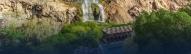
At the head of Wadi Zarqa Ma’in is the waterfall and hot spring called Hamamat Ma’in. It’s sited just under the Herodian fortress of Mukawir, and is believed to be one of the spots where Herod came to find a palliative for gout. It’s an impressive sight, and the start of an excellent but challenging hiking trail down Zarqa Ma’in to the Dead Sea–but the springs are part of the Six Senses Spa and Resort property, so admission is a bit pricey. If you’re looking for a luxurious out-of-the-way resort where you can pamper yourself with spa treatments and good service far from the crowds, this is the place to go.
Far more popular and less tourist-oriented is the Hamamat
Afra hot springs. Locals from all parts of Jordan visit the springs seeking
cures for a variety of ailments. At one time in the recent past, the area was
plagued by reminders of litter-happy picnickers. These days, some efforts have
been made to establish a clean and comfortable visitors’ center to permit
people to enjoy the springs without battling their way through piles of hummus
bowls and water bottles.
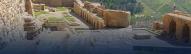
A string of castles along the mountains overlooking the Great Rift Valley marked the expansion of the Crusader invasion in the 11th and 12th centuries. KarakCastle, overlooking the southern end of the Dead Sea, is the largest of these hilltop fortresses. Located about midway between Amman and Petra, just south of Wadi Mujib, the KarakCastle has a gem of a museum inside the walls. It’s interesting to explore theextensive remains, and try to reconstruct just how the castle must have appeared in its heyday. The bustling modern city of Karak just outside the castle walls, with its winding narrow streets and plethora of shops and street stalls, is an interesting place to walk around, sample some of the popular local street food such as shawerma and felafel and the sinfully delicious baklava and knaffa sweets.
ShobakCastle (Mont Real) lies further south, about 30 km. to the north of Petra. It’s smaller than Karak and a bit more intact, which gives you a better chance to imagine how the whole castle fit together. It’s one of the region’s castles which was built atop a fresh-water spring (which can be reached through a perilous and oxygen-poor descent straight into the earth), which made it eminently defensible. Fall it did, though, eventually–as witness the ornate early-Islamic inscriptions carved over the top of earlier Christian symbols on many of the building blocks.
The remains of the Tafila castle, between Karak and Shobak, is little more than foundations. The location is gorgeous, though–just to the north of Wadi al-Hasa, the site now overlooks the thriving university city of modern Tafila.
Petra boasts the remains of two Crusader fortresses. The WayraCastle, another site which is little more than foundations today, still shows off a complex and intricate water-channel system if you are fortunate to be around when it rains. The Habees fortress, just a short distance away, was situated on the mountain which houses the old PetraMuseum, between ad-Deir and Um al-Biyara massif.
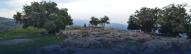
Located approximately 10 kilometers northwest of Ajlun, overlooking the land of Gilead, lies Tell Mar Elias. In Arabic, Mar Elias means Saint Elijah, and the site has long been identified as Tishbe, the birthplace of the Prophet Elijah.
Archaeological excavations at Tell Mar Elias uncovered one of the largest Byzantine churches in Jordan, dating to the 7th century AD, with 622 AD considered the most probable year of construction. What makes this church especially distinctive is its cross-shaped architectural design, a very rare style for the period.
Today, Tell Mar Elias remains a place of spiritual significance. Local Muslims and Christians continue to visit the site to practice their rituals—offering prayers, lighting candles, and tying ribbons to the surrounding trees—preserving its role as a living place of devotion.
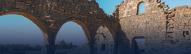
About 10 km to the north of Madaba, lies modern Hisban (Greek Esebon, Esbous; Latin Esbus) which is believed to be the biblical “Heshbon”, mentioned over 40 times in the Old Testament.
Hisban represents the archaeological spectrum of Jordan since there are artifacts from the Paleolithic Era, early Bronze Age, Iron Age, Greco-Roman Classical period, Byzantine Era, Early Islamic and Ottoman periods.
The archaeological site of Tell Hisban has a history of continuous human inhabitation; from the Paleolithic Era to the modern time. Archaeological discoveries include: a huge water reservoir, a massive defensive wall from the Hellenistic times, a Roman acropolis area, a Roman cemetery, and three early Christian basilica churches.

Um Al Jimal was built entirely from locally sourced black basalt and is considered the best-preserved of the Hauran towns. Its name in Arabic means “Mother of Camels,” a title that became increasingly fitting over time as Bedouins sheltered newborn camels among the ruins and made use of the ancient water reservoirs. Even today, it is not uncommon to see herds of white camels grazing alongside the ruins—one of the UAE’s sheikhs reportedly uses the site for breeding racing camels.
The enormous Nabataean water cisterns beside the site explain Um Al Jimal’s raison d’être: it served as a vital watering station for caravans and travelers journeying to and from Damascus.
At its height, Um Al Jimal was home to approximately 4,000 residents. Most of the best-preserved buildings date to the 6th century, when the town was predominantly Christian. At least 14 churches are scattered throughout the ruins. This abundance likely reflects not only civic devotion but also the intense doctrinal debates that characterized early Christianity.
At first impression, Um Al Jimal can feel austere due to its dark stone construction. Yet the more you explore, the more captivating it becomes. The black basalt buildings create a unique and atmospheric landscape that is both striking and beautiful. Walking within the city walls of this “Black Gem of the Desert,” beneath its brooding archways, it becomes clear why this hauntingly evocative city has inspired poets for centuries.
Dibeen forest is situated just south of the famous Roman city of Jerash, where it cloaks the steep hillsides over an area of some eight square kilometers. Most of the trees are Aleppo pines, mixed with evergreen oak (Quercus calliprinos) and a scattering of red-barked arbutus. It also has a few wild olive, pistachio and pear trees. The Aleppo pines are some of the oldest and largest in the kingdom and Dibeen is the driest part of the world in which they are known to grow naturally.

Wadi Mujib Nature Reserve
The Lowest Nature Reserve on Earth
Bordering the Dead Sea at 400 meters below sea level, the
Mujib Nature Reserve surrounds Wadi Mujib—a deep and majestic canyon cutting
through rugged highlands before draining into the Dead Sea. Seasonal streams
flow through many of the wadis, nurturing lush aquatic plant life along the
riverbeds.
Visitors are drawn to Mujib’s unique blend of challenge,
solitude, and serenity, experiencing a true wilderness environment unlike
anywhere else on Earth.
With its rich antiquities, Pella is a favorite among archaeologists. Below the main section of the site lies a perennial spring, which used to bubble out water to the nearby valley. To visit in the spring months is a particular treat as the hillsides are abundant with anemones, calendula, spring groundsel and asphodel.
Pella was often made into a battle ground, perhaps the reason that so little of the Roman Pella still exists. It has also been the victim of several earthquakes causing a great degree of damage to the site.
The Pella site also shows evidence of an Early Islamic residency and a medieval mosque; most likely dating back to 635 after Islamic forces defeated the Byzantine army and moved into Pella, living side by side with its Christian residents.
Dating back to 250,000 BC hunters have roamed the hills surrounding the site. By 5000BC there was a Neolithic farming village at Pella itself. The residents of Pella traded widely throughout the Mediterranean in the Canaanite period, as attested by the discovery of artifacts such as perfume bottles, pottery and ivory boxes. It is said that Alexander the Great “discovered” Pella, but there is no evidence to confirm this. Part of a Chalcolithic settlement (4th Millennium BC), is situated on the slopes of Jabal Sartaba, east of Tell Husn.
You can see why
this Jordan Valley site is an archeologist’s dream – something for everyone!