Madaba and Mt. Nebo
South of Jordan’s capital lies the home of the world’s largest collection of ancient mosaics. An archbishopric during the Byzantine era, Madaba contains historical mosaics, most of which are at least 1,400 years old.
Perhaps the most famous is the 6th century map of the Holy Land, the earliest original map to survive. Situated in the Greek Orthodox Church of St George, it is a stunning 25 by 5 meters of beautifully colored stone. Archaeologists have used this map to discover a number of important Biblical sites, including Jerusalem’s Cardo and the site of Jesus’ baptism at Bethany across the Jordan.
There is an impressive collection of restored Herodian and Byzantine mosaics on display in the Madaba Archaeological Park, the Madaba Museum, the Burnt Church, and the Apostles’ Church, as well as elsewhere around this living-museum city.
Modern Madaba & Mosaic School
Modern Madaba is built on the ancient ruins, so people are continually discovering ‘new’ mosaics under their houses, garages, and gardens.
In 1994 Queen Noor formally opened the Madaba School for Mosaic Art. Restoration of discovered mosaics is an important mission for the school’s students, who also extend the craft with modern designs and interpretations (see Handicraft Tour page). The school is now on the road to becoming a degree-granting institution affiliated with Jordan University.
Visiting Madaba
Most visitors make a quick stop to check out the map and then hit the road. We suggest staying a little longer. And not just for the mosaics, although that is certainly one reason.
Madaba is wonderfully diverse – about half Muslim and half Christian – contributing to the laid-back, tolerant atmosphere you’ll notice in the town. In the late afternoon, after most tourists have departed, stroll through the center of town and you’ll find many opportunities to stop for a chat, a cup of tea, or even an invitation home for dinner.
Food, Wine & Local Culture
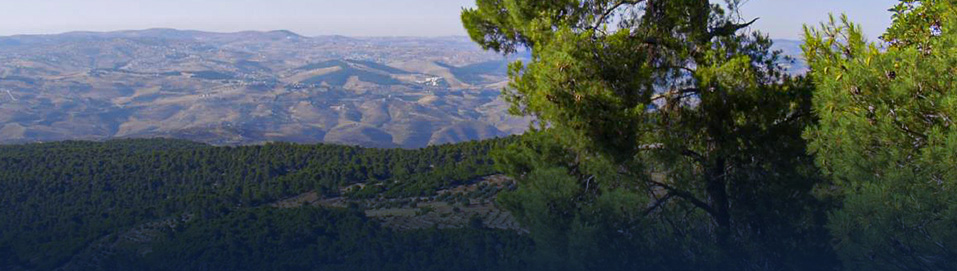
Madaba is surrounded by fertile farmland and vineyards, producing some of Jordan’s best table wines. Haret Jdoudna, the famous restaurant in the center of town, has a shady courtyard perfect for wine tasting.
The courtyard (name means “gardens of our ancestors”) is surrounded by old Madaba houses (early 20th century) which were once home to prominent local citizens – a city mayor and physician among them. Today, they house one of Jordan’s best traditional restaurants, small handicraft shops, and a pizzeria.
At night, visitors and locals mingle to enjoy the food, live entertainment, and hubbly-bubbly pipe until the wee hours.
Mt Nebo – Moses’ Promised Land
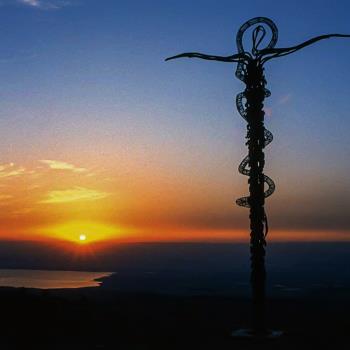
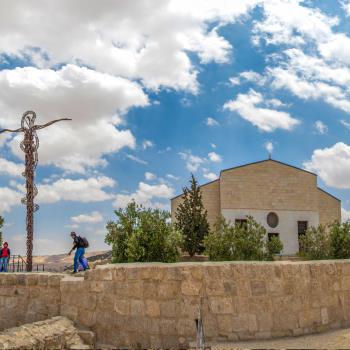
A short drive from Madaba takes you to Mt Nebo, where Moses was first shown the Promised Land. It is also said to be his death and burial place. The view encompasses the Dead Sea, Jordan River Valley, and Judean hills. On a clear day, you can see the spires and domes of Bethlehem and Jerusalem.
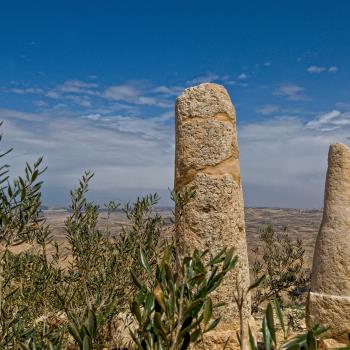
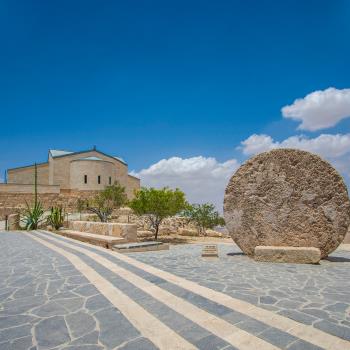
At Mt Nebo, the Franciscans have built a modern church over the ruins of previous pilgrimage churches. Inside the church are restored mosaics from the earlier churches. The modern church is surrounded by excavated ruins of ancient monastic settlements on this spot.
Historical Notes
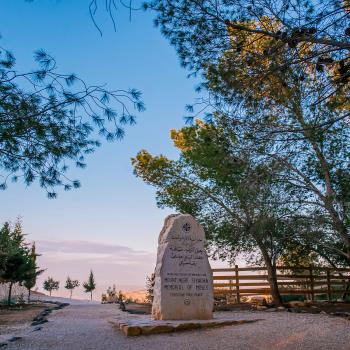
Pope John Paul II planted an olive tree beside the Moses monument during his Holy Land visit. A plaque commemorates this event. The Franciscan monks who purchased Mt Nebo in the 1930s still maintain a monastery on the site. The gates are closed to visitors an hour before sunset each day.