Um Al Jimal
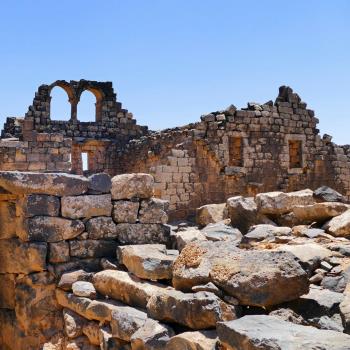
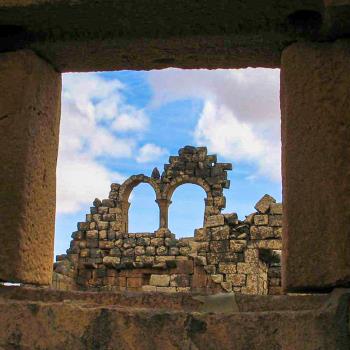
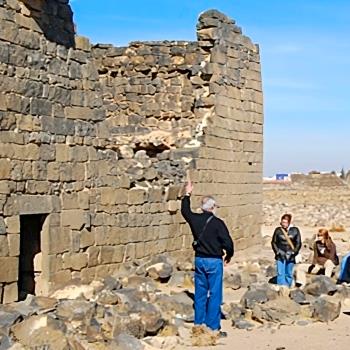
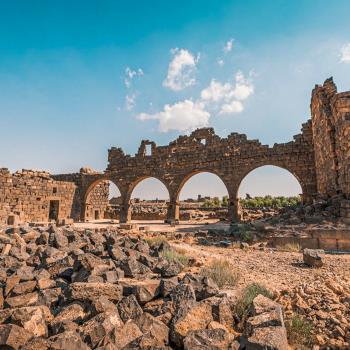
Um Al Jimal was built entirely from locally sourced black basalt and is considered the best-preserved of the Hauran towns. Its name in Arabic means “Mother of Camels,” a title that became increasingly fitting over time as Bedouins sheltered newborn camels among the ruins and made use of the ancient water reservoirs. Even today, it is not uncommon to see herds of white camels grazing alongside the ruins—one of the UAE’s sheikhs reportedly uses the site for breeding racing camels.
The enormous Nabataean water cisterns beside the site explain Um Al Jimal’s raison d’être: it served as a vital watering station for caravans and travelers journeying to and from Damascus.
At its height, Um Al Jimal was home to approximately 4,000 residents. Most of the best-preserved buildings date to the 6th century, when the town was predominantly Christian. At least 14 churches are scattered throughout the ruins. This abundance likely reflects not only civic devotion but also the intense doctrinal debates that characterized early Christianity.
At first impression, Um Al Jimal can feel austere due to its dark stone construction. Yet the more you explore, the more captivating it becomes. The black basalt buildings create a unique and atmospheric landscape that is both striking and beautiful. Walking within the city walls of this “Black Gem of the Desert,” beneath its brooding archways, it becomes clear why this hauntingly evocative city has inspired poets for centuries.